 Air Quality Awareness
What is Air Quality?
Air quality describes the conditions of the air we breathe every minute, of every day. When the air quality is good, everyone can safely spend time outdoors. But when air quality is poor, there are higher levels of pollution that can be harmful to your health. Air quality is communicated through the Air Quality Index and the Air Quality Forecast, so understanding these tools will help you stay aware of conditions in your area to make informed decisions for your health.
What is the Air Quality Forecast and the Air Quality Index?
MDE Meteorologists use current air quality and weather data to inform the Air Quality Forecast, a prediction of air quality conditions for the next few days. MDE’s Air Monitoring Team also keeps track of the current air quality conditions around the entire state. Both forecasted and current air quality conditions are shown on frequently updated maps, which are available
here.

The Air Quality Forecast and current conditions are presented using the Air Quality Index, which is a color-coded scale ranging from
“Good” to
“Hazardous” air quality. The Air Quality Index is an important tool for understanding current and predicted air quality conditions.
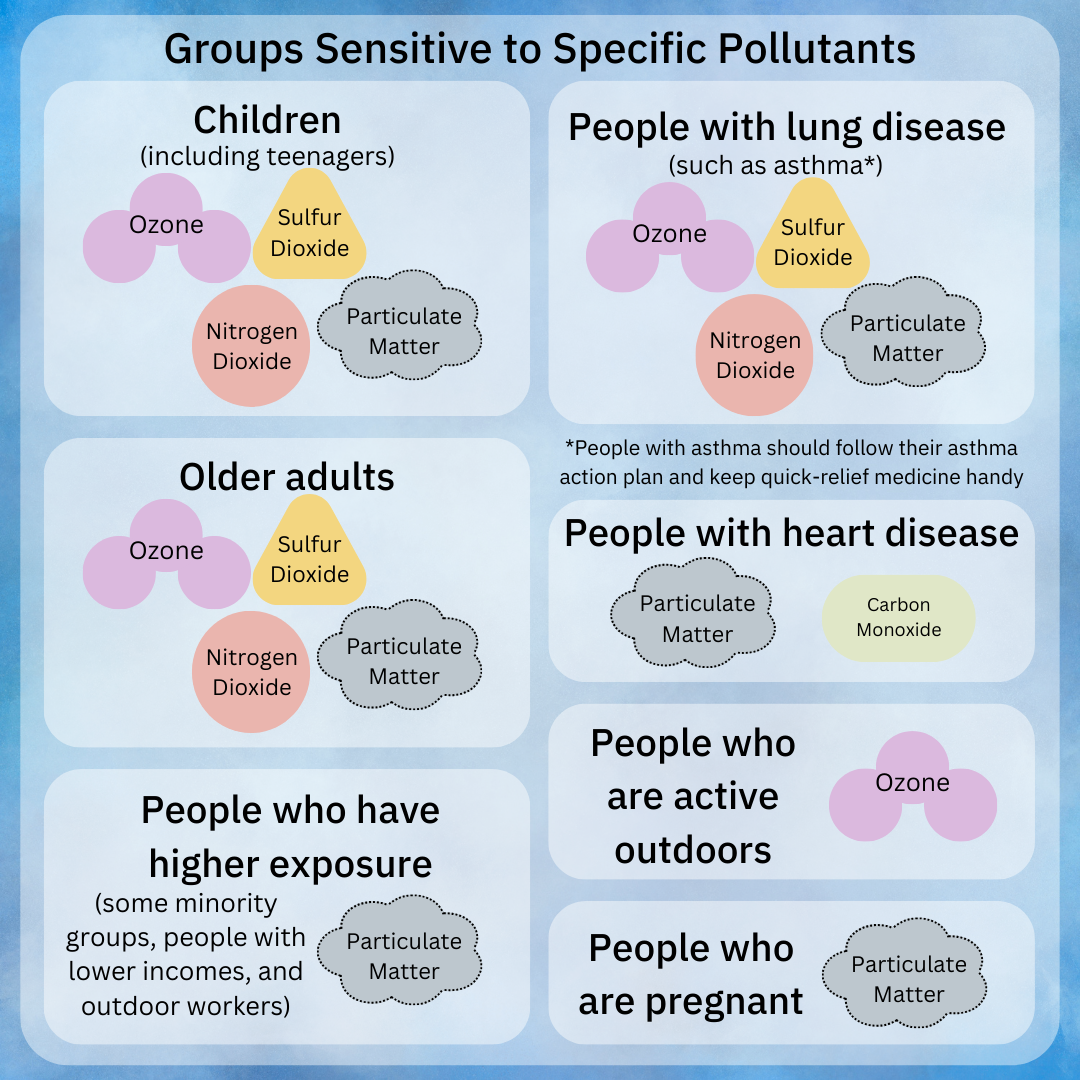
Unhealthy air quality can lead to negative health impacts, especially for sensitive groups. Sensitive groups include children, the elderly, and people with underlying conditions such as asthma or heart disease. Potential health impacts from increased exposure of poor air quality include shortness of breath, wheezing, coughing, eye irritation, chest pain, irregular heartbeat, and headaches
What is a "Sensitive Group?"
Depending on which pollutants are contributing to poor air quality, different groups of people are more likely to experience negative health effects when the AQI reaches code orange. If you fall into these groups, keep an eye out for days when these pollutants reach levels that could have a greater impact on your health:
What is Ozone?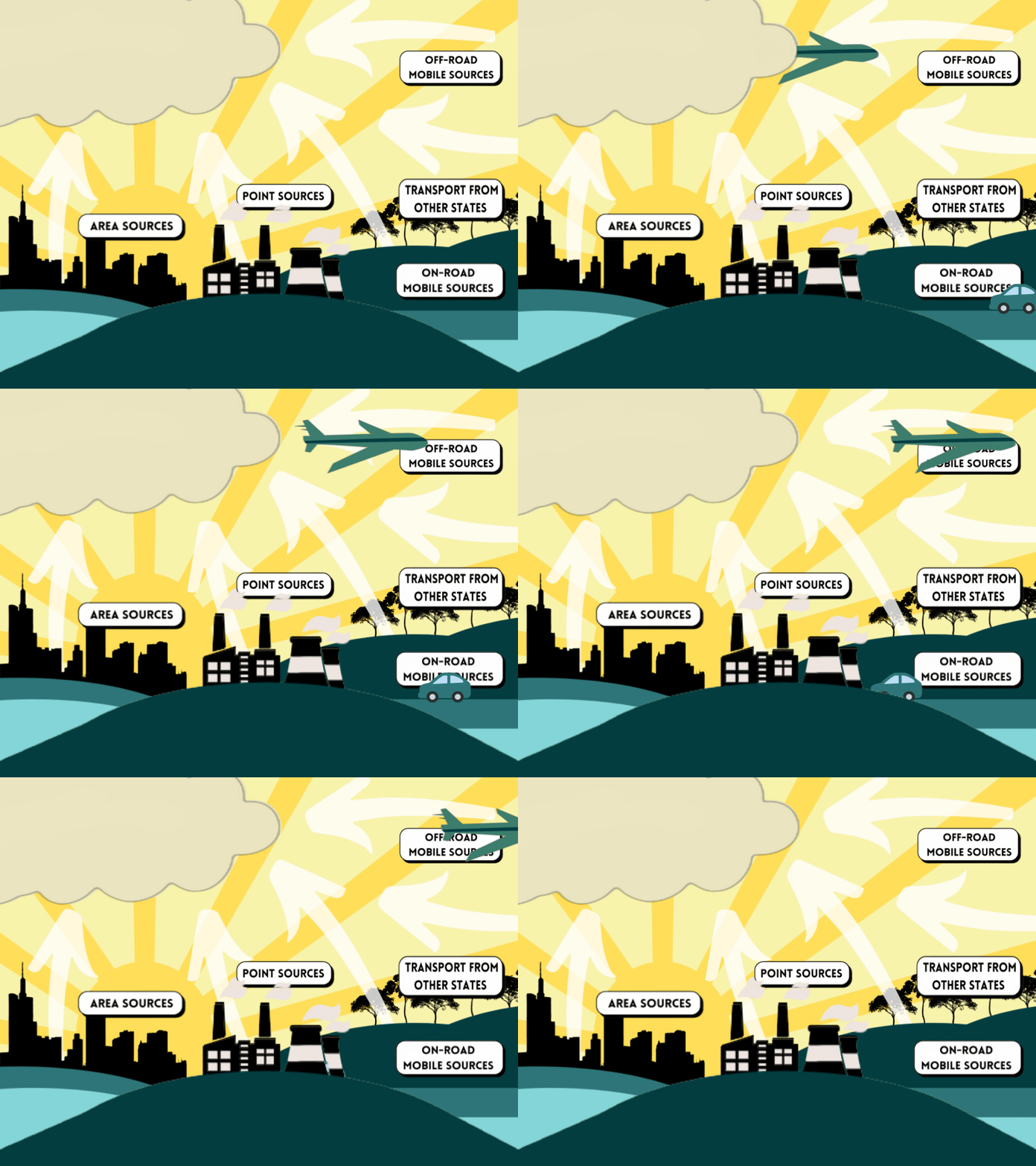
Ozone is a gas that plays different roles depending on where it is in the atmosphere. Naturally occurring "good" ozone in the upper atmosphere protects the Earth from the sun's ultraviolet rays; but when ozone forms closer to the ground, it has negative effects on human health and the environment.
Ground-level ozone is an air pollutant, and is more prominent in the warmer months because of how it forms. When sunlight interacts with a mixture of other air pollutants, a chemical reaction occurs that creates ground-level ozone. These other pollutants that contribute to ozone formation can come from a variety of everyday activities, including driving, lawnmowing, and spray painting, as well as larger sources like power plants and construction sites.
What is Particulate Matter?
Particulate Matter, or particle pollution, is a group of air pollutants that includes dust, smoke, dirt, soot, pollen, liquid droplets, and more. Some common sources of particle pollution are construction sites, agricultural areas, dirt roads, factories, fires, and industrial sites.
 Stay Aware! Take Action!
Why Should I Care About Air Quality?When you learn about air quality and the pollution that impacts it, you can make a direct impact on the people and environment around you. By staying aware of the air quality forecast, you can make informed decisions to protect your health by limiting time outdoors on poor air quality days - especially if you are part of a sensitive group. There are also actions you and your community can take to clean the air and inform others about the importance of air quality! MDE's Air Monitoring Team provides daily forecasts for Particulate Matter year-round and for Ozone during the ozone season. If you are interested in signing up for forecast emails, please click
here.
Everyone can play a part in reducing emissions, and more and more Marylanders are making changes to their daily routines to improve our air quality. Try these strategies to join us in keeping Maryland's air clean for everyone to breathe:
What is Idle Free MD?
Idle Free MD is a campaign to bring awareness to the public on the environmental burdens that come from idling your vehicle. Vehicle idling results in emissions of carbon dioxide, particulate matter and nitrogen oxide - all pollutants that harm the environment. Additionally, idling represents a significant health issue for children and people with existing respiratory issues like asthma and emphysema. Because of these reasons, many states have identified idling as an important issue that needs to be addressed. The Maryland Department of the Environment is committed to bringing together citizens, the trucking industry, schools and educational institutions, and other stakeholders to realize that five minutes matter when you needlessly idle your engine.
Clean Air Progress
Every year, the Department releases a Clean Air Progress Report that provides information on the important work that was done over the previous year to help improve air quality. The report also shares air quality data, proving that Maryland's air is cleaner than it was a decade ago. The 2026 Clean Air Progress Report can be found by clicking
here or is provided below.
Related Links

